"A raucous and colorful multitude of protesters, led by some of the aging
activists of the past.." is how the Washington Post described the January
27th rally and march to end the war in Iraq.
The Post went on to quote a number of people who seemed neither
raucous nor very colorful, Vietnam and Iraq War veterans, enlisted
men and women, students, and a soldier's wife who said she was sick
of all the deaths, of attending funerals.
This aging activist, never a leader, was not there. I was recovering from a
severe sinus infection, downcast because I could not go. I was there last time
when about 100,000 of us marched and called out, "No more! Stop Now!
Support our troops- bring them home!" and helped, I believe, influence the
elections that ousted some of the war's supporters.
The Post, the New York Times, and other media played the numbers game.
The phrase most used was "Tens of thousands", march organizers claimed
many more. No matter. Each person there represented many more who did
not get to DC. The tide has turned. The majority are now against the war.
Yet it goes on.
Democrats elected because of the groundswell of opinion against the war
have formulated a timid resolution with no teeth that amounts to a finger
shaking and clucks of "naughty, naughty, mustn't do." They need to be
reminded that they will be up for election again and that voters have a
long memory.
And we may not be "raucous and colorful", but neither will we be silent.
International Answer, one of the organizers of the January 27 march and
rally, responded to President Bush's speech about sending more troops to
Iraq: "Unwilling to accept the failure of his war of aggression in Iraq, his 'war
of choice', Bush announced tonight a plan that will succeed only in sending
thousands of Iraqis and U.S. soldiers to their graves in the next year."
The tower of empty shoes at the January rally was a powerful reminder of
the death and destruction wrought in this senseless war.
There will be a Global Day of Action on March 17th, a March on the
Pentagon, followed by local actions on March 19th and 20th, the fourth
anniversary of the invasion of Iraq.
The war in Iraq has now cost almost $363 billion.
See what it has cost you and your community.
Wednesday, January 31, 2007


Tuesday, January 23, 2007
Amazing Grace
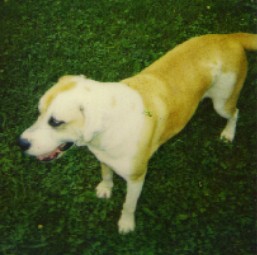
It was the old story: she followed us home.
I was walking with Buster, the only dog left after Ginger, the beautiful red
setter, was stolen, when the dog came trotting from a parking lot as if she
had been expecting us.
I started advertising under "Lost and Found", contacted the local veterinarian
to see if she'd been a patient there. I didn't want to keep her. Gil did.
"You need her when you go off walking by yourself," he said, "She would
protect you."
People were afraid of her, all right. The garage worker wouldn't get out
when he returned our car. "I don't go around pit bulls," he said.
Pit bull? When I asked the vet later, she said, "There's a little pit bull in her."
And varying amounts of other breeds: large, muscular, mastiff-type body,
bull dog or bloodhound drooping jowls, flopped-down ears. She was
brown and white. Part of her nose, the insides of her ears, and the pads
on her huge feet were a delicate pink.
She was neither the most beautiful nor the brightest dog in the world. She
had the habit of jumping up on me, feet planted against my chest, jaws
drooling in her joy to see me, while I staggered to keep my balance. She
weighed about 80 pounds. She turned over the garbage can and scattered
the contents and, when I refused to let her in the house, contending it would
be like trying to live with an elephant, she began digging around the
foundation. I believe she thought that if she could dig under it, she would
come up inside the house.
I kept trying to find her owner, advertising, posting signs. I didn't want her,
but she wouldn't leave. I believed someone would eventually claim her, for
she appeared to be healthy and well-fed, not your typical stray. In the
meantime, I needed to call her something besides hey, you, dog!
I had been engaged in conversations with a preacher and his mother who
had started an antique store in Alabama. At one point the preacher told
me that even though I wasn't religious, he said: "I believe you have
grace."
I was pondering this idea when I looked at the dog. "Even though you
are big and ugly and people are afraid of you,' I told her, "Maybe you
have grace," and when she leapt up exuberantly and tried to reach my
shoulders, I said, "And I know you need some grace."
So the name stuck. We called her Grace.
She had been there about a week when Gil and I decided to take the dogs
to Moon Creek, about ten miles away in Alabama. It was a hot afternoon
and they could go in the water, which was always ice cold, and run
around in the woods above the creek.
This was the place where I had seen a whole corridor of trillium blooming
back in the spring, but this was August and hot. We waded a bit and cooled
off, then ambled around looking for cattails and watching the schools of
minnows, startling frogs that plopped and splashed, then dove to the bottom
to bury in the sand. .
When we were ready to go, only Buster followed us to the van. We walked
up the hill to the edge of the woods, whistling and calling. From the hill, we
could see much of the creek and the area around it, but Grace was not there.
I was walking along the edge of the woods calling loudly, "Grace! Grace!"
And I turned to look back down at the creek, still calling: "Grace! Grace!"
just yelling out a final "Grace!" when I saw them. A group of people
clustered at the edge of the creek. Some wore white robes. All the faces
were turned upward toward me. I stood there, feeling my face grow hot.
It seemed like a long time before one of the men detached from the group
and waded out into the creek, fully clothed. He was followed by a woman
wearing a robe.
I hurried back to where Gil was. "We better leave," I told him, "They're
having a baptizing down the creek."
That night I slept out in my van, preferring a cool breeze to air
conditioning. Before I went to sleep, I told myself: "I didn't want
that big ugly dog anyway." But during the night I roused, feeling
anxious, remembering the dog, and knew I would have to go look
for her in the morning.
When the morning sun struck the window at my head, Gil was sitting
beside me. "The dog came back," he said, "She's here."
Ten miles, and surely she had never rode from our house to that
creek before. Grace never left our yard again except to go with me.
Monday, January 15, 2007
Remembering Dr. King
Chicago, Chicago, that racist town.
Chicago, where some of the whites who seemed horrified when Black
protesters were met with dogs and fire hoses in the South joined
rioting white mobs when Blacks tried to move into their neighborhoods.
Officially, Chicago schools were integrated. Actually, because children
went to neighborhood schools, Black schools were overcrowded, many
operating on double shifts, while hundreds of classrooms in white schools
stood empty. Civil Rights leaders and neighborhood organizers led protests
against the inadequate education of Black children all through the early 1960's,
demanding reform of the school system, the ouster of Chicago School
Superintendent Benjamin Willis and the trailer classrooms he'd ordered used
for the Black schools, calling the trailers "Willis Wagons".
But the schools would not be integrated until the neighborhoods were
integrated. Blacks were penned up in the large ghettos on the south and
west sides, and kept there through the collusion of real estate agents,
landlords, and the Chicago City Government which was run by the
Democratic Machine with Mayor Richard J. Daley at the helm. The slum
housing in the ghettos was profitable. Apartments were carved up and rents
doubled. With building inspectors paid off, buildings need not be maintained,
but could be milked until they collapsed or burned.
Dr. Martin Luther King, Jr., announced the campaign for open housing in
Chicago when he spoke to a crowd of about 50,000 at a 1966 rally at
Soldier's Field, then he led thousands of us to City Hall where he posted
a list of demands to the door, an action reminiscent of that of an earlier
Martin Luther. I remember the little Black school children racing along
the sidewalks and threading through the marchers in the streets, and the
songs we sang as we marched: "Go tell Mayor Daley, we shall not be
moved.."
Dr. King and some of his aides had moved into a slum apartment on the
West Side to call attention to the shameful living conditions of the majority
of Chicago Blacks. Daley continued to proclaim there was no segregation
in Chicago, that the "minorities" lived where they lived because they wanted
to, but building inspectors, who usually winked at violations while accepting
payoffs, cracked down on the owner of the building Dr. King occupied, and
repairs began on that building.
Dick Gregory, who had been involved in some of the protests against Willis
and school segregation, led small daily marches all that summer after the big
rally and march to City Hall. I was working part-time. My children were with
their father. Three or four days a week I would hop on a bus or el after calling
someone to learn where to go that day.
Gregory was performing in San Francisco, flying back home every night to his
family, then out to walk with us every day. While we assembled, waiting a few
minutes for stragglers, he told us jokes. We were getting free what patrons of
the hungry i had to pay to hear. I only remember something about one joke; it
had to do with aliens coming to earth, seeing people putting gas hose nozzles
into their cars and believing that must be the way earthlings had sex.
After the jokes, we would start walking, sometimes 30 or 40 of us, sometimes
as many as 75, always on the sidewalks, for we had no permit for use of the
streets. There were always two or three nuns in their black habits near the
head of the march and some white men from protestant churches, but most of
the marchers on the days I went were Black. One older man carried one child
and led another, grandchildren he watched while his daughter worked. By the
end of the day, several others would have taken turns carrying the small
children. We carried signs and sang freedom songs, threading our way through
all-white northside neighborhoods or walking around in the Loop, stopping
traffic when we streamed across the streets when the light turned green, but
intent on staying together, we continued to walk across after it turned red.
There were always some of "Chicago's finest" along, sometimes accompanying
us on their motorcycles, or keeping pace on the sidewalk across the street from
us. Plainclothesmen, members of Chicago's infamous Red Squad, or Police
Intelligence, shadowed us, parking nearby, then driving past to park just ahead
of us.
One day, when the police were especially harassing, Gregory moved quickly
down the line of marchers handing out quarters. Then he led the way into a
subway station. We rode for a few blocks, then resumed peacefully walking
the sidewalks with no policemen herding us along.
I wasn't along the day they marched through Mayor Daley's neighborhood,
Bridgeport. We never knew to where we would march, only the place we
would meet, so that was not what kept me away. Daley's white neighbors,
many of whom were on the city payroll, threw eggs and stones. Like Daley,
most were Catholic, but that did not keep them from splattering a priest with
eggs and saliva. I was told later about the song Daley's neighbors sang:
Oh, I'd love to be an Alabama trooper,
That is what I'd really like to be,
For if I were an Alabama trooper,
I could shoot a nigger legally.
I had to be told about what happened. Reporters did not report the mob
action, there were no scenes of angry folks in Bridgeport on the evening
news.
There was more violence when Dr. King led us, a much larger group than
had daily followed Dick Gregory, into the all-white working-class community
of Gage Park. Dr. King was hit in the head by a rock. Crowds of jeering
whites called insults and threw more stones and bottles. Policemen held them
back and the marchers stayed together while we walked out.
Later that year I needed to find another apartment, but was having no luck.
I would grab the daily paper and turn to the classifieds, but every place
I called I was told the apartment had been rented.
I was making another futile call from work when my co-worker at the desk
behind me overheard.
"Let me try," she said, holding out her hand for the ad. She was given
an appointment to look at the apartment that I had been told was no longer
available.
"It's your southern accent," she said. "They think you're Black." She was
Jewish.
Shortly after Dr. King was assassinated and the Black riot-rebellions that
followed, Congress passed a watered-down version of an open housing bill
that it had been sitting on for a long time. And the Chicago City Council
voted to name a street Martin Luther King, Jr., Drive.
But the Chicago Democratic Machine and the real estate interests- the two
intertwined and overlapping and sharing power- won on the final count.
Federal money was used for massive "urban renewal" programs that
demolished affordable apartments and gentrified neighborhoods where
only a few Black professionals and no white working-class folks could live.
When I was in Chicago two years ago, Cabrini-Green, that notorious
vertical ghetto, had been reduced to rubble. There had been rumors for
years about how real estate interests coveted the land just west of the
Loop for rich suburbanites who wanted to move back into the city.
There are Plans to tear down all 53 housing projects, displacing some
40,000 people, mostly Black, by 2009. The condominium craze that
began more than 30 years ago resulted in many of the affordable
apartments formerly occupied by working-class families being
converted into expensive housing that was for sale, not for rent.
Townhouses selling for $500,000 to $700,000 have been erected near
Cabrini-Green, with plans to build more. A few units with subsidized rents
(and with formidable requirements and restrictions for [potential renters)
were built, but not enough to house the thousands of displaced families.
Some reports indicate that many have migrated to other segregated areas,
to neighborhoods that are 90 percent or more Black. Nobody seems to
know how or where the rest are going to live.
Chicago, where some of the whites who seemed horrified when Black
protesters were met with dogs and fire hoses in the South joined
rioting white mobs when Blacks tried to move into their neighborhoods.
Officially, Chicago schools were integrated. Actually, because children
went to neighborhood schools, Black schools were overcrowded, many
operating on double shifts, while hundreds of classrooms in white schools
stood empty. Civil Rights leaders and neighborhood organizers led protests
against the inadequate education of Black children all through the early 1960's,
demanding reform of the school system, the ouster of Chicago School
Superintendent Benjamin Willis and the trailer classrooms he'd ordered used
for the Black schools, calling the trailers "Willis Wagons".
But the schools would not be integrated until the neighborhoods were
integrated. Blacks were penned up in the large ghettos on the south and
west sides, and kept there through the collusion of real estate agents,
landlords, and the Chicago City Government which was run by the
Democratic Machine with Mayor Richard J. Daley at the helm. The slum
housing in the ghettos was profitable. Apartments were carved up and rents
doubled. With building inspectors paid off, buildings need not be maintained,
but could be milked until they collapsed or burned.
Dr. Martin Luther King, Jr., announced the campaign for open housing in
Chicago when he spoke to a crowd of about 50,000 at a 1966 rally at
Soldier's Field, then he led thousands of us to City Hall where he posted
a list of demands to the door, an action reminiscent of that of an earlier
Martin Luther. I remember the little Black school children racing along
the sidewalks and threading through the marchers in the streets, and the
songs we sang as we marched: "Go tell Mayor Daley, we shall not be
moved.."
Dr. King and some of his aides had moved into a slum apartment on the
West Side to call attention to the shameful living conditions of the majority
of Chicago Blacks. Daley continued to proclaim there was no segregation
in Chicago, that the "minorities" lived where they lived because they wanted
to, but building inspectors, who usually winked at violations while accepting
payoffs, cracked down on the owner of the building Dr. King occupied, and
repairs began on that building.
Dick Gregory, who had been involved in some of the protests against Willis
and school segregation, led small daily marches all that summer after the big
rally and march to City Hall. I was working part-time. My children were with
their father. Three or four days a week I would hop on a bus or el after calling
someone to learn where to go that day.
Gregory was performing in San Francisco, flying back home every night to his
family, then out to walk with us every day. While we assembled, waiting a few
minutes for stragglers, he told us jokes. We were getting free what patrons of
the hungry i had to pay to hear. I only remember something about one joke; it
had to do with aliens coming to earth, seeing people putting gas hose nozzles
into their cars and believing that must be the way earthlings had sex.
After the jokes, we would start walking, sometimes 30 or 40 of us, sometimes
as many as 75, always on the sidewalks, for we had no permit for use of the
streets. There were always two or three nuns in their black habits near the
head of the march and some white men from protestant churches, but most of
the marchers on the days I went were Black. One older man carried one child
and led another, grandchildren he watched while his daughter worked. By the
end of the day, several others would have taken turns carrying the small
children. We carried signs and sang freedom songs, threading our way through
all-white northside neighborhoods or walking around in the Loop, stopping
traffic when we streamed across the streets when the light turned green, but
intent on staying together, we continued to walk across after it turned red.
There were always some of "Chicago's finest" along, sometimes accompanying
us on their motorcycles, or keeping pace on the sidewalk across the street from
us. Plainclothesmen, members of Chicago's infamous Red Squad, or Police
Intelligence, shadowed us, parking nearby, then driving past to park just ahead
of us.
One day, when the police were especially harassing, Gregory moved quickly
down the line of marchers handing out quarters. Then he led the way into a
subway station. We rode for a few blocks, then resumed peacefully walking
the sidewalks with no policemen herding us along.
I wasn't along the day they marched through Mayor Daley's neighborhood,
Bridgeport. We never knew to where we would march, only the place we
would meet, so that was not what kept me away. Daley's white neighbors,
many of whom were on the city payroll, threw eggs and stones. Like Daley,
most were Catholic, but that did not keep them from splattering a priest with
eggs and saliva. I was told later about the song Daley's neighbors sang:
Oh, I'd love to be an Alabama trooper,
That is what I'd really like to be,
For if I were an Alabama trooper,
I could shoot a nigger legally.
I had to be told about what happened. Reporters did not report the mob
action, there were no scenes of angry folks in Bridgeport on the evening
news.
There was more violence when Dr. King led us, a much larger group than
had daily followed Dick Gregory, into the all-white working-class community
of Gage Park. Dr. King was hit in the head by a rock. Crowds of jeering
whites called insults and threw more stones and bottles. Policemen held them
back and the marchers stayed together while we walked out.
Later that year I needed to find another apartment, but was having no luck.
I would grab the daily paper and turn to the classifieds, but every place
I called I was told the apartment had been rented.
I was making another futile call from work when my co-worker at the desk
behind me overheard.
"Let me try," she said, holding out her hand for the ad. She was given
an appointment to look at the apartment that I had been told was no longer
available.
"It's your southern accent," she said. "They think you're Black." She was
Jewish.
Shortly after Dr. King was assassinated and the Black riot-rebellions that
followed, Congress passed a watered-down version of an open housing bill
that it had been sitting on for a long time. And the Chicago City Council
voted to name a street Martin Luther King, Jr., Drive.
But the Chicago Democratic Machine and the real estate interests- the two
intertwined and overlapping and sharing power- won on the final count.
Federal money was used for massive "urban renewal" programs that
demolished affordable apartments and gentrified neighborhoods where
only a few Black professionals and no white working-class folks could live.
When I was in Chicago two years ago, Cabrini-Green, that notorious
vertical ghetto, had been reduced to rubble. There had been rumors for
years about how real estate interests coveted the land just west of the
Loop for rich suburbanites who wanted to move back into the city.
There are Plans to tear down all 53 housing projects, displacing some
40,000 people, mostly Black, by 2009. The condominium craze that
began more than 30 years ago resulted in many of the affordable
apartments formerly occupied by working-class families being
converted into expensive housing that was for sale, not for rent.
Townhouses selling for $500,000 to $700,000 have been erected near
Cabrini-Green, with plans to build more. A few units with subsidized rents
(and with formidable requirements and restrictions for [potential renters)
were built, but not enough to house the thousands of displaced families.
Some reports indicate that many have migrated to other segregated areas,
to neighborhoods that are 90 percent or more Black. Nobody seems to
know how or where the rest are going to live.
Monday, January 08, 2007
What Are They Trying to Say?
I was passing Walmart's Vision Center when I stopped short and
looked again at their sign. And stood there laughing.
Fastened to the top of the sign at the entrance was a smaller,
computer-generated sign that read in large black letters "Outside
Perscriptions Accepted".
A woman at a desk just inside the alcove looked up and said anxiously,
"May I help you?"
"Yes," I called, for I was some distance from her, "you can learn to spell."
She looked taken aback. "Why, what's spelled wrong?"
I should have thought of a snappy reply such as: "Come over here and
give yourself a vision test," but I didn't.
"Prescriptions," I said, still talking loudly so she could hear me,
"Oh, how I wish I had my camera."
By then another woman and a man had come from the back to see what
was going on. I walked away to get the milk for which I'd come, still
laughing. I was imagining a chart for testing vision that read: "How
Minnie Dawgs Can You See," for I knew the issue was not just spelling
but a matter of pronunciation.
For example, the so-called joke that surfaces every Christmas about the
man from the North traveling through a small Southern town. He stops at
a Nativity Scene, complete with mother and child, Joseph, donkeys,
sheep, and, standing off to one side, three men dressed in fire fighters'
uniforms, one holding a fire hose.
"Wait a minute," he says to himself, Mary and Joseph and three firemen?"
Unable to contain his curiosity, he goes into a diner and orders a cup of
coffee so he can query the waitress.
She fixes him with a disapproving gaze. "You Yankees don't never read the
Bible," she snaps.
"Yes," the Northern man says, "Yes, I've read the Bible, but I've never
read anything in it about firemen."
"Well read it again," she says, "The Bible plainly states that those three
men came from afar."
And so it was with the Vision Center personnel. The employee who made
the sign spelled prescription the way she had heard it pronounced, and the
way she undoubtedly pronounced it herself.
It isn't just words, but whole phrases that remind me that southern speech
is a different language, just as the American language is different from
that of the English. In writing, the southerner has to continually translate
in order to communicate.
A woman commenting on an Atlanta Journal-Constitution article wrote: "If
they would of looked after her.."
She has always heard "would've" as "would of", and to take care of someone
is to "look after" the person. Shopping carts are called "buggies", the clerks
behind the cash register will call out to a customer, "I'll gitchee over here!"
Which makes me think of witches and Halloween, but at least they are
cheerful. I still remember the surly, unwilling clerks in New York when I was
there one winter, but in all charity I remind myself that attempting to survive in
that city on the minimum wage would put anyone in a bad temper.
I frequently had to interpret for Gil after we moved to North Georgia. Once
I went with him to get the lawn mower repaired.
"How long did you leave it set up?" the repairman asked him.
Gil just stood there.
"He means," I said, "How long has it been since you used the machine?"
I'm reminded of a German friend who tried to explain to us the difference
between High German, the official language of the country, and Low
German. He tried to get Gil and I to move to Germany.
"But what would I do there," I asked.
"You could teach English," he said, and yes, he was serious.
But the other friends around us weren't. They were laughing.
"I can just see it," one said, "scores of Germans speaking English with a
Southern accent."
looked again at their sign. And stood there laughing.
Fastened to the top of the sign at the entrance was a smaller,
computer-generated sign that read in large black letters "Outside
Perscriptions Accepted".
A woman at a desk just inside the alcove looked up and said anxiously,
"May I help you?"
"Yes," I called, for I was some distance from her, "you can learn to spell."
She looked taken aback. "Why, what's spelled wrong?"
I should have thought of a snappy reply such as: "Come over here and
give yourself a vision test," but I didn't.
"Prescriptions," I said, still talking loudly so she could hear me,
"Oh, how I wish I had my camera."
By then another woman and a man had come from the back to see what
was going on. I walked away to get the milk for which I'd come, still
laughing. I was imagining a chart for testing vision that read: "How
Minnie Dawgs Can You See," for I knew the issue was not just spelling
but a matter of pronunciation.
For example, the so-called joke that surfaces every Christmas about the
man from the North traveling through a small Southern town. He stops at
a Nativity Scene, complete with mother and child, Joseph, donkeys,
sheep, and, standing off to one side, three men dressed in fire fighters'
uniforms, one holding a fire hose.
"Wait a minute," he says to himself, Mary and Joseph and three firemen?"
Unable to contain his curiosity, he goes into a diner and orders a cup of
coffee so he can query the waitress.
She fixes him with a disapproving gaze. "You Yankees don't never read the
Bible," she snaps.
"Yes," the Northern man says, "Yes, I've read the Bible, but I've never
read anything in it about firemen."
"Well read it again," she says, "The Bible plainly states that those three
men came from afar."
And so it was with the Vision Center personnel. The employee who made
the sign spelled prescription the way she had heard it pronounced, and the
way she undoubtedly pronounced it herself.
It isn't just words, but whole phrases that remind me that southern speech
is a different language, just as the American language is different from
that of the English. In writing, the southerner has to continually translate
in order to communicate.
A woman commenting on an Atlanta Journal-Constitution article wrote: "If
they would of looked after her.."
She has always heard "would've" as "would of", and to take care of someone
is to "look after" the person. Shopping carts are called "buggies", the clerks
behind the cash register will call out to a customer, "I'll gitchee over here!"
Which makes me think of witches and Halloween, but at least they are
cheerful. I still remember the surly, unwilling clerks in New York when I was
there one winter, but in all charity I remind myself that attempting to survive in
that city on the minimum wage would put anyone in a bad temper.
I frequently had to interpret for Gil after we moved to North Georgia. Once
I went with him to get the lawn mower repaired.
"How long did you leave it set up?" the repairman asked him.
Gil just stood there.
"He means," I said, "How long has it been since you used the machine?"
I'm reminded of a German friend who tried to explain to us the difference
between High German, the official language of the country, and Low
German. He tried to get Gil and I to move to Germany.
"But what would I do there," I asked.
"You could teach English," he said, and yes, he was serious.
But the other friends around us weren't. They were laughing.
"I can just see it," one said, "scores of Germans speaking English with a
Southern accent."
Thursday, January 04, 2007
The Atlanta Beauty
The giant panda cub at the Atlanta Zoo was named Mei Lan, which means
Atlanta Beauty. Following Chinese custom, her naming ceremony was held
when she was 100 days old, with representatives from China attending.
The cub weighed only about a pound at birth on September 6th last year,
but was up to 13.9 pounds by December 28th and measured 28.9 inches
from her nose to the tip of her tail. And she looks like a Panda now, in
contrast to her almost hairless, rat-like appearance at birth. Her efforts at
earning to walk and other activities can be watched on the Panda Cam
between 10 a.m. and 5p.m. est.
Mei Lan and her parents, Yang Yang and Lun Lun, are at the zoo on a
$10 million loan agreement with China. The zoo is to pay $1 million per
year for 10 years and is supposed to make a one-time $600,000 payment
for each cub born in their facilities, including Mei Lan, who is to be sent to
China when she is about two years old. Funds from the lease payments by
Atlanta and other zoos are used by China for conservation and educational
programs about the Pandas as an endangered species.
Officials of Zoo Atlanta are reported to have found their expectations of
greatly increased attendance because of the pandas disappointingly
unrealized. It seems likely that more would attend if the Zoo would lower
their admission rate- currently $17.99 for "adults" (those 12 and over),
$13.99 for "seniors", college students, and members of the military, and
$12.99 for children aged 3- 11. In order to do so they might need to not
spend millions renting animals that are adequately protected in their homeland.
Zoos all over the U.S. have been steadily pricing themselves into luxuries over
the years. The Chicago Zoo used to be free. The last time I was there, I had
to pay $12 just to park in their parking lot one afternoon. At least the Atlanta
Zoo has free parking.
The Giant Panda has long been a symbol of peace in China.
Atlanta Beauty. Following Chinese custom, her naming ceremony was held
when she was 100 days old, with representatives from China attending.
The cub weighed only about a pound at birth on September 6th last year,
but was up to 13.9 pounds by December 28th and measured 28.9 inches
from her nose to the tip of her tail. And she looks like a Panda now, in
contrast to her almost hairless, rat-like appearance at birth. Her efforts at
earning to walk and other activities can be watched on the Panda Cam
between 10 a.m. and 5p.m. est.
Mei Lan and her parents, Yang Yang and Lun Lun, are at the zoo on a
$10 million loan agreement with China. The zoo is to pay $1 million per
year for 10 years and is supposed to make a one-time $600,000 payment
for each cub born in their facilities, including Mei Lan, who is to be sent to
China when she is about two years old. Funds from the lease payments by
Atlanta and other zoos are used by China for conservation and educational
programs about the Pandas as an endangered species.
Officials of Zoo Atlanta are reported to have found their expectations of
greatly increased attendance because of the pandas disappointingly
unrealized. It seems likely that more would attend if the Zoo would lower
their admission rate- currently $17.99 for "adults" (those 12 and over),
$13.99 for "seniors", college students, and members of the military, and
$12.99 for children aged 3- 11. In order to do so they might need to not
spend millions renting animals that are adequately protected in their homeland.
Zoos all over the U.S. have been steadily pricing themselves into luxuries over
the years. The Chicago Zoo used to be free. The last time I was there, I had
to pay $12 just to park in their parking lot one afternoon. At least the Atlanta
Zoo has free parking.
The Giant Panda has long been a symbol of peace in China.
Tuesday, January 02, 2007
Beautiful Fungi
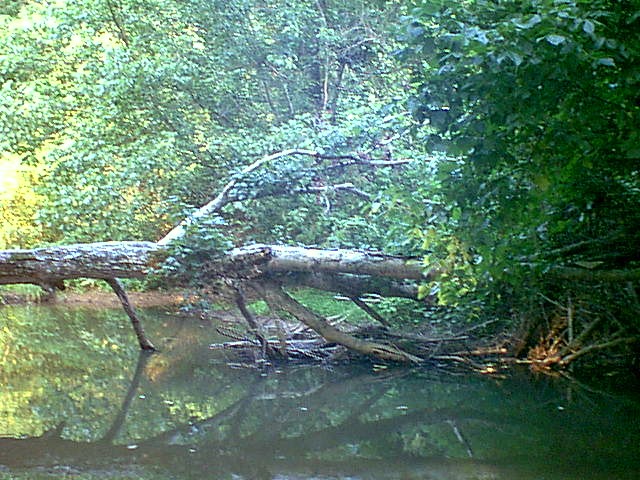
Three years ago a tree fell across the creek, making a natural
footbridge. The cat that prowls along the banks came across it
sometimes, and the gray crane that visits here perched on it.
For three years it stayed alive, as if it were the most natural
thing in the world for a tree to grow horizontally. Every spring
new leaves covered its branches, and every fall they turned brown
and fell away.
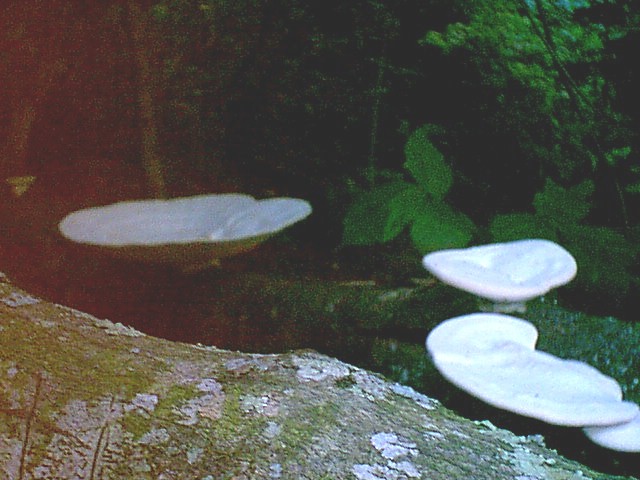
Then, during the drought last summer, it began to die. On the
upper trunk, concealed by the leaves to the right in the first
photo, three large fungi sprang up. One day they were just there.
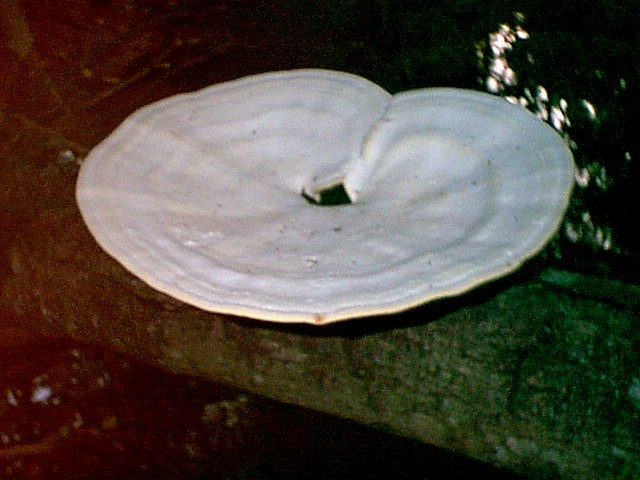
The largest fungus is about a foot in diameter. It looks like a
serving bowl, perhaps a bowl for fruit.
I will be mourning the death of this tree. There aren't enough years
left for me to grow another that large.
Sunday, December 31, 2006
Empty Mailboxes Salute Ford
All federal facilities, including post offices, will be closed on
Tuesday in honor of former President Gerald R. Ford.
Not getting mail for two days in a row will certainly cause Ford to be
remembered, though not necessarily in a good way. One man suggested a
better way to honor Ford would be to allow everyone to mail letters to their
friends and relatives free on Tuesday. This, he said, would be in line with the
Republicans' concern for "Family Values".
I'm thinking of those, especially some of the older folks, for whom going to
the Menlo post office every morning is a highlight of their day. They may get
only a bill or an advertising circular, or nothing, but that isn't the only reason
they go. They see other people, exchange greetings, stop to chat awhile.
Some will not have heard and will go anyway, stare blankly into their empty
boxes, try the inner door, even though it will be covered by a blind, the lights
off. I saw folks reading the sign on the outer door on Friday, shaking their
heads in dismay.
Most already remember Ford as the Man Who Pardoned Nixon, and many
believe he would never have become president had he not agreed to the
pardon in advance. I'm sure all the young people drifting through the county
jails because of various petty crimes remember that a president who
masterminded breaking-and-entering, burglary, sabotage and worse was
pardoned, while they had to serve time.
For children who have been told that any child can grow up to be elected
president, Ford means that some children can grow up to be president- and
vice president- without being elected.
The business of pushing hero worship is getting harder in this age of
information. People are making their own heroes, as witness the accolades
to James Brown. When the man had been dead three days, he was packing
them in at the Apollo, capacity crowd. And the tears shed for him were real.
I think of those who waited for hours along the route to glimpse the train
carrying FDR's body from Georgia, and can't imagine such a scene for
either father or son Bush, Carter, Clinton, or Ford. The last mass
outpouring of grief over a president's death was when Kennedy was
assassinated. But that was before we knew he'd tried to have Castro killed,
approved the clandestine bombing of North Vietnam, and instigated the
assassination of South Vietnamese President Ngo Dinh Diem. Seymour
Hersh in his book, The Dark Side of Camelot, told how reporters shielded
from public view JFK's sexual escapades that included having law
enforcement officers in various cities bring to Kennedy's hotels high-priced
call girls, two at a time for Kennedy and one apiece for other members of his
entourage, and other such activities that could have made Clinton, with his
blow job in the White House, look like a choirboy.
But the reporters were following tradition. Voters never knew the terrible
extent of Franklin Roosevelt's infirmities. He was never photographed in
the wheelchair to which he was confined, and only those present saw what
an ordeal it was for him to pretend to walk, with his son dragging him along,
what agony to stand while he gave speeches. If the voters had know how
unfit he was to serve, they may not have re-elected him.
Nixon and Watergate punctured the media conspiracy to perfume and
powder our nation's great leaders before allowing the public to view them.
Now a new book which I must read: A Century of Media, A Century of
War, by Robin Andersen. Publicity about the book states that it "traces
media gullibility, official deception and propaganda through the years. It's
a reminder that the media's role in making the case for the Iraq War is part
of a larger story, that of a press corps that regularly cheers on American
military action while shielding readers and viewers from its consequences."
I hope it lives up to its promise. Shine a little more light this way, please.
Tuesday in honor of former President Gerald R. Ford.
Not getting mail for two days in a row will certainly cause Ford to be
remembered, though not necessarily in a good way. One man suggested a
better way to honor Ford would be to allow everyone to mail letters to their
friends and relatives free on Tuesday. This, he said, would be in line with the
Republicans' concern for "Family Values".
I'm thinking of those, especially some of the older folks, for whom going to
the Menlo post office every morning is a highlight of their day. They may get
only a bill or an advertising circular, or nothing, but that isn't the only reason
they go. They see other people, exchange greetings, stop to chat awhile.
Some will not have heard and will go anyway, stare blankly into their empty
boxes, try the inner door, even though it will be covered by a blind, the lights
off. I saw folks reading the sign on the outer door on Friday, shaking their
heads in dismay.
Most already remember Ford as the Man Who Pardoned Nixon, and many
believe he would never have become president had he not agreed to the
pardon in advance. I'm sure all the young people drifting through the county
jails because of various petty crimes remember that a president who
masterminded breaking-and-entering, burglary, sabotage and worse was
pardoned, while they had to serve time.
For children who have been told that any child can grow up to be elected
president, Ford means that some children can grow up to be president- and
vice president- without being elected.
The business of pushing hero worship is getting harder in this age of
information. People are making their own heroes, as witness the accolades
to James Brown. When the man had been dead three days, he was packing
them in at the Apollo, capacity crowd. And the tears shed for him were real.
I think of those who waited for hours along the route to glimpse the train
carrying FDR's body from Georgia, and can't imagine such a scene for
either father or son Bush, Carter, Clinton, or Ford. The last mass
outpouring of grief over a president's death was when Kennedy was
assassinated. But that was before we knew he'd tried to have Castro killed,
approved the clandestine bombing of North Vietnam, and instigated the
assassination of South Vietnamese President Ngo Dinh Diem. Seymour
Hersh in his book, The Dark Side of Camelot, told how reporters shielded
from public view JFK's sexual escapades that included having law
enforcement officers in various cities bring to Kennedy's hotels high-priced
call girls, two at a time for Kennedy and one apiece for other members of his
entourage, and other such activities that could have made Clinton, with his
blow job in the White House, look like a choirboy.
But the reporters were following tradition. Voters never knew the terrible
extent of Franklin Roosevelt's infirmities. He was never photographed in
the wheelchair to which he was confined, and only those present saw what
an ordeal it was for him to pretend to walk, with his son dragging him along,
what agony to stand while he gave speeches. If the voters had know how
unfit he was to serve, they may not have re-elected him.
Nixon and Watergate punctured the media conspiracy to perfume and
powder our nation's great leaders before allowing the public to view them.
Now a new book which I must read: A Century of Media, A Century of
War, by Robin Andersen. Publicity about the book states that it "traces
media gullibility, official deception and propaganda through the years. It's
a reminder that the media's role in making the case for the Iraq War is part
of a larger story, that of a press corps that regularly cheers on American
military action while shielding readers and viewers from its consequences."
I hope it lives up to its promise. Shine a little more light this way, please.
Friday, December 29, 2006
Peace on Earth?
Author William Blum writes in the preface to the British edition of his
book Rogue State:
book Rogue State:
"If I were the president, I could stop terrorist attacks against the United
States in a few days. Permanently. I would first apologize -- very publicly
and very sincerely -- to all the widows and the orphans, the impoverished
and the tortured, and all the many millions of other victims of American
imperialism.
"I would then announce that America's global interventions -- including
"I would then announce that America's global interventions -- including
the awful bombings -- have come to an end. And I would inform Israel
that it is no longer the 51st state of the union but -- oddly enough -- a
foreign country. I would then reduce the military budget by at least 90%
and use the savings to pay reparations to the victims and repair the damage
from the many American bombings and invasions. There would be more
than enough money. Do you know what one year of the US military budget
that it is no longer the 51st state of the union but -- oddly enough -- a
foreign country. I would then reduce the military budget by at least 90%
and use the savings to pay reparations to the victims and repair the damage
from the many American bombings and invasions. There would be more
than enough money. Do you know what one year of the US military budget
is equal to? One year. It's equal to more than $20,000 per hour for every
hour since Jesus Christ was born.
"That's what I'd do on my first three days in the White House. On the fourth
day, I'd be assassinated."
You can read more about Rogue State at William Blum's website.
Thursday, December 28, 2006
And the Band Played On
Lighted Christmas trees can still be glimpsed through windows. Little
bulbs that would be white if lighted drip from eaves, emulating icicles
in temperatures that would melt ice during the day, re-freeze it at night.
Inflated Santas and grazing reindeer are stranded among the string after
string of colored lights that still outline windows, walls, and trees. They
have the lost and forlorn look of waiting, their blaze of glory ended,
time to crawl away unheralded into their almost year-long hibernation.
The poor children who were gifted and feted go quietly about their
business of living in poverty, conveniently forgotten except as adjuncts
to the warm glow still occasionally remembered by those who Helped
Make Christmas For Those Less Fortunate.
Walmart can take down their giant overhead posters showing smiling
people with new cell phones, jewelry, computers, children sitting in a
plastic car, all with the large words: "Be Bright". Took me a few minutes
to connect those words with one of the songs that kept erupting from the
radio if one didn't keep the dial moving. Your days will "Be Merry and
Bright" if you buy all this stuff, particularly if you buy it from Walmart.
Shredded wrapping paper and strands of tinsel lay across the glass
and plastic dead soldiers on the trash heap. The party's over.
There'll be another burst of merriment, real and artificial, as the year
grinds to a halt. Then the cold dawn. Then the credit card bills will roll
in. Bankruptcy courts will be crowded when the Piper cannot be paid,
even though the new laws have made it so much more difficult and
expensive that debtors will have to seek new loans, going even further
in debt, in order to file. The rate of home foreclosures, already the
highest in years, will accelerate.
One of the houses outlined in lights and flanked by several large
Christmassy figures is, according to notices in the newspaper, in
the midst of foreclosure now. And all the lights are lighted. A last
hurrah....
I lit a candle to celebrate the shortest day of the year. Now that
it's gone, each day will be seconds and minutes longer. Available
light, truly a gift.
bulbs that would be white if lighted drip from eaves, emulating icicles
in temperatures that would melt ice during the day, re-freeze it at night.
Inflated Santas and grazing reindeer are stranded among the string after
string of colored lights that still outline windows, walls, and trees. They
have the lost and forlorn look of waiting, their blaze of glory ended,
time to crawl away unheralded into their almost year-long hibernation.
The poor children who were gifted and feted go quietly about their
business of living in poverty, conveniently forgotten except as adjuncts
to the warm glow still occasionally remembered by those who Helped
Make Christmas For Those Less Fortunate.
Walmart can take down their giant overhead posters showing smiling
people with new cell phones, jewelry, computers, children sitting in a
plastic car, all with the large words: "Be Bright". Took me a few minutes
to connect those words with one of the songs that kept erupting from the
radio if one didn't keep the dial moving. Your days will "Be Merry and
Bright" if you buy all this stuff, particularly if you buy it from Walmart.
Shredded wrapping paper and strands of tinsel lay across the glass
and plastic dead soldiers on the trash heap. The party's over.
There'll be another burst of merriment, real and artificial, as the year
grinds to a halt. Then the cold dawn. Then the credit card bills will roll
in. Bankruptcy courts will be crowded when the Piper cannot be paid,
even though the new laws have made it so much more difficult and
expensive that debtors will have to seek new loans, going even further
in debt, in order to file. The rate of home foreclosures, already the
highest in years, will accelerate.
One of the houses outlined in lights and flanked by several large
Christmassy figures is, according to notices in the newspaper, in
the midst of foreclosure now. And all the lights are lighted. A last
hurrah....
I lit a candle to celebrate the shortest day of the year. Now that
it's gone, each day will be seconds and minutes longer. Available
light, truly a gift.
Tuesday, December 26, 2006
Expensive Creationist Stickers
Four years ago, Cobb County Georgia school officials had placed inside
35,000 textbooks stickers that read "Evolution is a theory not a fact".
The lawsuit by opposing parents has finally ended. The judge ordered the
stickers removed last year and school officials had them scraped off, but
appealed. Terms of the recent settlement include no altering of the evolution
material and $166,659.00 payment toward attorneys fees by the school
system.
appealed. Terms of the recent settlement include no altering of the evolution
material and $166,659.00 payment toward attorneys fees by the school
system.
I cannot help thinking how enriched the school libraries would have been
if the $166,659.00 could have been spent on books. And it's shocking that
books were defaced by those who tell children not to deface books.
books were defaced by those who tell children not to deface books.
Below are the ending paragraphs of the article as printed in the Atlanta
Journal-Constitution, or read the whole thing (you may have to sign in).
Journal-Constitution, or read the whole thing (you may have to sign in).
"They were trying to do the right thing," said Taylor, a parent of three Cobb
students. "It's terrorist organizations like the ACLU that are hijacking our
country's educational system by imposing their own secular agenda on the
rest of us."
students. "It's terrorist organizations like the ACLU that are hijacking our
country's educational system by imposing their own secular agenda on the
rest of us."
Barry Lynn, executive director of Americans United for Separation of Church
and State in Washington, D.C., hailed the case's conclusion.
and State in Washington, D.C., hailed the case's conclusion.
"Students should be taught sound science, and the curriculum should not be
altered at the behest of aggressive religious groups," Lynn said. "Cobb County
school officials have taken the right step to ensure that their students receive a
quality education."
altered at the behest of aggressive religious groups," Lynn said. "Cobb County
school officials have taken the right step to ensure that their students receive a
quality education."
Incoming school board member John Crooks, a Baptist minister who opposed
the stickers, said he was pleased the board reached a settlement.
the stickers, said he was pleased the board reached a settlement.
"Moving on to more important educational matters is essential," he said.
Monday, December 18, 2006
Here Comes the Sun
It was 70 degrees on Saturday and I was working up a sweat, leveling
the ground with a mattock, setting concrete blocks to extend one of the
garden beds. No need to think of ice frozen across the creek only a few
days ago and more bitter cold to come. This may be December, but it
won't officially be winter until the solstice, so it must be autumn still.
I have to dig into the chert below the bare inch or so of soil. It's a slow
job. I have to stop every few minutes to remove the rocks, and I've had
to use a crowbar and hammer to dislodge some of the bigger ones. In a
normal subsoil, the smaller rocks could help promote drainage, but in chert
they serve to bind the clay into something resembling concrete. Occasionally
I expose an earthworm and quickly re-bury it so it can continue to hibernate.
Buckie eats the grubs I uncover. Sometimes he starts trying to dig with me
He seems to think I am trying to dig out some creature, such as a mole,
for that is the reason he would have for digging. But the chert is so hard
packed he loses interest and wanders away.
There's a ridge to the west of here so these short days are even more
quickly truncated as the sun drops low in the sky. Then I have to put
on my coat. It feels like autumn again.
I'm thinking about the last year my maternal grandmother was alive and
we sat outside without sweaters on Christmas Day. Ever after we called
it the shirtsleeve Christmas.
And I'm thinking of how the seasons of the earth have been used as an
analogy for the ages of humans. There's the September Song, for instance:
"and the days grow short when you reach December..."
Mother used to say she was living on borrowed time after she'd passed the
Biblical three score and ten. Falling leaves, bare skeletal trees,
teetering on the edge of winter.
Well, we are all living on death row. The difference between me and that
teen-age boy who was killed in an automobile accident last week is that I
have been fighting gravity for enough years that I'm aware there can't be
too many left. Yet it is still fall for awhile...
Heavy rains have leached the bright colors from the leaves carpeting the
yard and left them a motley brown. So far I've filled seven trash bags and
still have no rake to replace the one destroyed in the house fire, but the
leaves are so deep in some areas it's been easy to gather them. The large
leaves from the sycamore tree quickly fill a bag. I've set the bags up
near the road where the sun will hit them and help turn them to compost
for my garden beds, and where they will help insulate the place where a
water pipe cracked last summer and spouted a geyser that cost me a $60
water bill.
When I was acquiring this place, the seller, who built the house and lived
in it for a few years, told me, "Don't rake the leaves! Let them rot,
they're good for the ground!" And he was to tell me again, and yet again,
as if he had invented the idea of enriching the earth with rotted leaves. Or
did he think I was decrepit and hard of hearing, I was only in my 60's then.
Gil and I, as first time gardeners on the Menlo lot, had subscribed to the
magazine "Organic Gardening", so I knew something about using leaves to
build good earth. So I didn't rake them. And when the creek flooded the
yard in February, as it does almost every year, it pulled into its swirling
waters all the leaf remains along with any topsoil they'd help create when
it receded.
The next year I bagged some of the leaves and set the bags, three or four
of them, beside the house foundation, thinking they could help insulate and
maybe help keep the waterpipes from freezing.
And when the creek rose again the bags were broken open, the leaves
carried off.
I'd like to think of fall as a time of rest after the harvest, of fields lying
fallow. But just like the farmer who didn't actually rest, but turned to different
chores, there's plenty here to do outside, and not just work.
My middle son, who is a forest ranger, bought me an LED light on an elastic
band to wear on my head. He said I could walk along the creek at night and
see any animals more easily in its bright light. It's also good for a night walk
in the woods, it leaves my hands free to push aside branches and briers. By
the time Buckie and I started out on Saturday night it was down to 35 and
the brilliant white light showed my breath as a dense curling fog that obscured
my vision. There was a clamminess to the cold that made it seep into me, so
we didn't go far before we turned back.
Then Sunday it was again up to 70! The crows seemed especially
delighted, flying from tree to tree and calling to one another in their
raucous voices. They seemed to be playing a game. I frequently see
them in the pasture looking big as chickens walking around. One is
crippled, so I know it is the same bunch that has been hanging around
for years.
I worked a little while at the garden bed, then I put the tools aside and
spent the rest of the afternoon just dawdling and poking around. I was
sorry I had taken down the hammock and stored it away.
It is good to have this hiatus, to be able to be outside in the sunshine on
these warm December days. It is good just to be.
the ground with a mattock, setting concrete blocks to extend one of the
garden beds. No need to think of ice frozen across the creek only a few
days ago and more bitter cold to come. This may be December, but it
won't officially be winter until the solstice, so it must be autumn still.
I have to dig into the chert below the bare inch or so of soil. It's a slow
job. I have to stop every few minutes to remove the rocks, and I've had
to use a crowbar and hammer to dislodge some of the bigger ones. In a
normal subsoil, the smaller rocks could help promote drainage, but in chert
they serve to bind the clay into something resembling concrete. Occasionally
I expose an earthworm and quickly re-bury it so it can continue to hibernate.
Buckie eats the grubs I uncover. Sometimes he starts trying to dig with me
He seems to think I am trying to dig out some creature, such as a mole,
for that is the reason he would have for digging. But the chert is so hard
packed he loses interest and wanders away.
There's a ridge to the west of here so these short days are even more
quickly truncated as the sun drops low in the sky. Then I have to put
on my coat. It feels like autumn again.
I'm thinking about the last year my maternal grandmother was alive and
we sat outside without sweaters on Christmas Day. Ever after we called
it the shirtsleeve Christmas.
And I'm thinking of how the seasons of the earth have been used as an
analogy for the ages of humans. There's the September Song, for instance:
"and the days grow short when you reach December..."
Mother used to say she was living on borrowed time after she'd passed the
Biblical three score and ten. Falling leaves, bare skeletal trees,
teetering on the edge of winter.
Well, we are all living on death row. The difference between me and that
teen-age boy who was killed in an automobile accident last week is that I
have been fighting gravity for enough years that I'm aware there can't be
too many left. Yet it is still fall for awhile...
Heavy rains have leached the bright colors from the leaves carpeting the
yard and left them a motley brown. So far I've filled seven trash bags and
still have no rake to replace the one destroyed in the house fire, but the
leaves are so deep in some areas it's been easy to gather them. The large
leaves from the sycamore tree quickly fill a bag. I've set the bags up
near the road where the sun will hit them and help turn them to compost
for my garden beds, and where they will help insulate the place where a
water pipe cracked last summer and spouted a geyser that cost me a $60
water bill.
When I was acquiring this place, the seller, who built the house and lived
in it for a few years, told me, "Don't rake the leaves! Let them rot,
they're good for the ground!" And he was to tell me again, and yet again,
as if he had invented the idea of enriching the earth with rotted leaves. Or
did he think I was decrepit and hard of hearing, I was only in my 60's then.
Gil and I, as first time gardeners on the Menlo lot, had subscribed to the
magazine "Organic Gardening", so I knew something about using leaves to
build good earth. So I didn't rake them. And when the creek flooded the
yard in February, as it does almost every year, it pulled into its swirling
waters all the leaf remains along with any topsoil they'd help create when
it receded.
The next year I bagged some of the leaves and set the bags, three or four
of them, beside the house foundation, thinking they could help insulate and
maybe help keep the waterpipes from freezing.
And when the creek rose again the bags were broken open, the leaves
carried off.
I'd like to think of fall as a time of rest after the harvest, of fields lying
fallow. But just like the farmer who didn't actually rest, but turned to different
chores, there's plenty here to do outside, and not just work.
My middle son, who is a forest ranger, bought me an LED light on an elastic
band to wear on my head. He said I could walk along the creek at night and
see any animals more easily in its bright light. It's also good for a night walk
in the woods, it leaves my hands free to push aside branches and briers. By
the time Buckie and I started out on Saturday night it was down to 35 and
the brilliant white light showed my breath as a dense curling fog that obscured
my vision. There was a clamminess to the cold that made it seep into me, so
we didn't go far before we turned back.
Then Sunday it was again up to 70! The crows seemed especially
delighted, flying from tree to tree and calling to one another in their
raucous voices. They seemed to be playing a game. I frequently see
them in the pasture looking big as chickens walking around. One is
crippled, so I know it is the same bunch that has been hanging around
for years.
I worked a little while at the garden bed, then I put the tools aside and
spent the rest of the afternoon just dawdling and poking around. I was
sorry I had taken down the hammock and stored it away.
It is good to have this hiatus, to be able to be outside in the sunshine on
these warm December days. It is good just to be.
Monday, December 11, 2006
Deep Freeze in the Sunny South
There was frost on my pumpkin Friday morning, or there would have been
if I had a pumpkin.
The Atlanta Journal-Constitution predicted the lowest Georgia
temperatures in two years With "Deep Freeze in the South" headlines.
Strange to walk on frozen ground, like walking on concrete, the grass
glinting with ice crystals. Ice on the creek made it resemble a still pond,
but the water was flowing under the ice covering and tumbling over the
rocks just beyond the bridge. Buckie walked across the creek, then tested
the edges with his paw until he could press the ice down and drink the water
that puddled on top. We've had cold nights, plenty of frost and some ice,
but this was our first hard freeze.
After seeing the forecast, I crawled under the floor to check on the water
pipes. It was the first time I had been under since I repaired a bad leak in
mid-summer, and I was dismayed to see several wet spots on the ground,
indicating minor leaks and drips. Maybe those drips would help prevent
freezing, I thought, along with the faucets dripping inside all night. I hope to
be able to wait until spring to start replacing the pipes, for the builder who
sold the building to me wrapped all the pipes in plastic and wound electrical
tape around the plastic.It was harder to cut this material off than it was to
replace the cracked pipe last summer.
When I first acquired the building, there was an outside hydrant flush against
the house, but the water turn-off valve was past it, under the house, and there
was no way to turn off the water to this hydrant except by turning it off at the
meter. Builder had encased the shaft up to the handle and spout in concrete in
an effort to prevent its freezing, but it had apparently frozen anyway, for there
was a constant dribble through a crack in the concrete. Still, it came in handy
as my sole source of water when I had the hot water heater moved from the
pantry, where it crowded the space and was warping the floor, and a washer
connection installed in the utility room I had built on half the back porch. I
still haven't installed another outside hydrant. I made one attempt, but gave
up, there's a rock that will have to be broken up before pipe can be
connected. I've always just carried water from the creek for my plants.
My learning to plumb has been like someone re-inventing the wheel. I had
watched Gil when he laid a pipe from the old house to the garden, and
that was the first plumbing he ever did. Not long afterward, being faced
with being without water while he was away for several days was a great
incentive to my learning to replace a pipe or two. It was a skill that came
in handy during his long illness. It's amazing what one can learn when there's
little money and things have to be done. I also re-wired the telephones after
lightning struck and fried them.
Now I still repair when I can, replacing washers in faucets for instance, for I
can eat for a week for the total of one plumber's bill. My daughter-in-law,
who had to serve as an apprentice plumber for several months as training for
her job as office manager and sales rep for a huge plumbing supply company,
installed my new toilet and will be bringing a new faucet and spray set for my
kitchen sink, but she lives too far away to call on often. I've bought a new
pipe-cutting tool, no more tedious hacksawing and filing off burrs, and I'll be
working on the pipes next spring- if they only hold until then. And if only the
pipes outside under the ground don't freeze, as they did one year at the old
house.
By afternoon it was up to 40, the sun shining, the air still. Buckie and I
walked down the creek bank, breathing in the cold, clear air. The
ground stayed frozen and not much of the ice melted, for the sunshine was
pleasant, but seemed to lack heat. I finally had to come inside, my toes
were numb. Back down in the 'teens on Saturday night. The hard freezes
will kill off a lot of the destructive and annoying insects, unlike last winter
when, although it stayed cold longer than usual- I had to have heat in
early June- there were no really low temperatures. I read there were
problems with huge swarms of yellow jackets in Alabama, and this was
blamed on the lack of a hard winter.
Yes, I know our winters are a joke to those in the north. I lived in
Chicago for 20 years. But the cold here never lasts, it will gradually
warm up until it rains again. Then cold and freezing again. One can
never become used to the cold so that each cold spell is something of
a shock. But then again, after it has been so cold, a day when the
thermometer reaches 50 will feel almost balmy, especially if the sun
is shining and there's no cold wind.
I wish we would have a real snow this year. It's cold enough to snow
throughout the winter, but seldom does. When even a light snow is forecast,
people flock to the stores and buy up all the bread and milk, children are
sent home from school and the mills let the workers out early. We have hills
and no salting or snow removal equipment. A deeper snow can shut
everything down for days. If it warms up enough to partly melt and then
re-freeze at night, the ice can bring down power lines, and what is common
in the North can become a crisis here in the South.
I've filled jugs with water and stocked my pantry, and I still have the
concrete blocks and metal plate I used to heat food and water for coffee
by the gas wall heater the last time the power was out, so I'm ready.
Let it snow!
if I had a pumpkin.
The Atlanta Journal-Constitution predicted the lowest Georgia
temperatures in two years With "Deep Freeze in the South" headlines.
Strange to walk on frozen ground, like walking on concrete, the grass
glinting with ice crystals. Ice on the creek made it resemble a still pond,
but the water was flowing under the ice covering and tumbling over the
rocks just beyond the bridge. Buckie walked across the creek, then tested
the edges with his paw until he could press the ice down and drink the water
that puddled on top. We've had cold nights, plenty of frost and some ice,
but this was our first hard freeze.
After seeing the forecast, I crawled under the floor to check on the water
pipes. It was the first time I had been under since I repaired a bad leak in
mid-summer, and I was dismayed to see several wet spots on the ground,
indicating minor leaks and drips. Maybe those drips would help prevent
freezing, I thought, along with the faucets dripping inside all night. I hope to
be able to wait until spring to start replacing the pipes, for the builder who
sold the building to me wrapped all the pipes in plastic and wound electrical
tape around the plastic.It was harder to cut this material off than it was to
replace the cracked pipe last summer.
When I first acquired the building, there was an outside hydrant flush against
the house, but the water turn-off valve was past it, under the house, and there
was no way to turn off the water to this hydrant except by turning it off at the
meter. Builder had encased the shaft up to the handle and spout in concrete in
an effort to prevent its freezing, but it had apparently frozen anyway, for there
was a constant dribble through a crack in the concrete. Still, it came in handy
as my sole source of water when I had the hot water heater moved from the
pantry, where it crowded the space and was warping the floor, and a washer
connection installed in the utility room I had built on half the back porch. I
still haven't installed another outside hydrant. I made one attempt, but gave
up, there's a rock that will have to be broken up before pipe can be
connected. I've always just carried water from the creek for my plants.
My learning to plumb has been like someone re-inventing the wheel. I had
watched Gil when he laid a pipe from the old house to the garden, and
that was the first plumbing he ever did. Not long afterward, being faced
with being without water while he was away for several days was a great
incentive to my learning to replace a pipe or two. It was a skill that came
in handy during his long illness. It's amazing what one can learn when there's
little money and things have to be done. I also re-wired the telephones after
lightning struck and fried them.
Now I still repair when I can, replacing washers in faucets for instance, for I
can eat for a week for the total of one plumber's bill. My daughter-in-law,
who had to serve as an apprentice plumber for several months as training for
her job as office manager and sales rep for a huge plumbing supply company,
installed my new toilet and will be bringing a new faucet and spray set for my
kitchen sink, but she lives too far away to call on often. I've bought a new
pipe-cutting tool, no more tedious hacksawing and filing off burrs, and I'll be
working on the pipes next spring- if they only hold until then. And if only the
pipes outside under the ground don't freeze, as they did one year at the old
house.
By afternoon it was up to 40, the sun shining, the air still. Buckie and I
walked down the creek bank, breathing in the cold, clear air. The
ground stayed frozen and not much of the ice melted, for the sunshine was
pleasant, but seemed to lack heat. I finally had to come inside, my toes
were numb. Back down in the 'teens on Saturday night. The hard freezes
will kill off a lot of the destructive and annoying insects, unlike last winter
when, although it stayed cold longer than usual- I had to have heat in
early June- there were no really low temperatures. I read there were
problems with huge swarms of yellow jackets in Alabama, and this was
blamed on the lack of a hard winter.
Yes, I know our winters are a joke to those in the north. I lived in
Chicago for 20 years. But the cold here never lasts, it will gradually
warm up until it rains again. Then cold and freezing again. One can
never become used to the cold so that each cold spell is something of
a shock. But then again, after it has been so cold, a day when the
thermometer reaches 50 will feel almost balmy, especially if the sun
is shining and there's no cold wind.
I wish we would have a real snow this year. It's cold enough to snow
throughout the winter, but seldom does. When even a light snow is forecast,
people flock to the stores and buy up all the bread and milk, children are
sent home from school and the mills let the workers out early. We have hills
and no salting or snow removal equipment. A deeper snow can shut
everything down for days. If it warms up enough to partly melt and then
re-freeze at night, the ice can bring down power lines, and what is common
in the North can become a crisis here in the South.
I've filled jugs with water and stocked my pantry, and I still have the
concrete blocks and metal plate I used to heat food and water for coffee
by the gas wall heater the last time the power was out, so I'm ready.
Let it snow!
Thursday, December 07, 2006
Living Off the Land
Not exactly.
I never have.
My mother gardened when I was in my teens and my husband had a garden
some distance from our house. I was never invited to work in them, nor did I
volunteer.
Mother raised tomatoes, green beans, and usually a few stalks of corn. She
canned tomatoes and blackberries, but wouldn't try canning green beans and
corn for she didn't have a pressure cooker. She also made blackberry jam
and jelly and once someone gave her some apples. Our old house had no
closets so she stacked the jars of food against the wall in the middle room,
supposed to be a dining room, but we needed it for a bedroom. After the
apple jelly had cooled and sealed she was putting it away as I passed
through on my way to the kitchen. She was holding a jar to the light,
admiring its amber contents.
"Look," she said, "isn't it pretty!"
I mumbled something, thinking I'd appreciate it more if she'd offer me some
for the biscuit I took from the warming oven. And someone should have
slapped me up side of the head for not appreciating her and the work she'd
done, but my head was full of school and boys and the need to polish my
black-and-white saddle oxfords for the next day.
Then I was grown and I was canning and freezing and preserving food in an
attempt to make a cotton mill worker's wages stretch to cover the needs of
six people. I was also washing, ironing, sewing shirts for the boys and dresses
for the girl, cleaning the house and attending PTA meetings, and I had little
time for gardening. We did, when the children were old enough, go berry
picking, and I made blackberry jelly, and yes, the jelly was pretty in the jars.
When Gil and I moved to North Georgia to a house with a large garden plot,
we gardened with zeal, at first from necessity, later because the food we grew
tasted so much better than any we could buy. The garden grew up in weeds
during his long illness, though we usually could manage three or four tomato
plants.
Now it is necessity again that is making me into an avid gardener. I want to
grow my own spinach and green onions and not risk death or paralysis from
buying them. And the store prices of produce continue to climb commensurate
with the price of fuel for transportation. This past summer I was able to buy
some produce for less at the flea market from local growers, or from some
who haul the produce in to sell with no store overhead, and I shall continue
to buy some there, for I won't be able to grow all I need.
This lot used to be part of the pasture that borders it, and the ground should
have been made rich from horse and cow droppings over time. But the
ground here is low, and the man who built the house didn't want to spend
the money to have good fill dirt hauled, so he filled it in a little with chert,
which is a mixture of red clay and rock, frequently used as a base for roads.
It supports a mix of grass and weeds that pass for a lawn, and that's about
all. In order to garden, I've had to build raised beds, rectangles enclosed
with concrete blocks and filled with some bought dirt and composted cow
manure, sand from the creek for drainage, compost from my two plastic
trash cans, a slow process, and some good earth from the woods when
I can get it, carrying two half-filled buckets at a time.
So far my beds are raised only by about 3 inches. When I get enough dirt in
them, I will start another one. This past summer I had tomatoes, jalapenos,
and zucchini. Squash borers got into the stalks and cut the zucchini harvest
short. But I also had basil, marigolds, and garlic chives, all in the two small
beds. And I planted sage and rosemary in two hollow slices of the tree that
fell and had to be sawed up, and oregano, thyme, pennyroyal and rue in
pots. All but the pennyroyal have been unscathed by the frost.
Coleslaw is a staple for my dinners through the fall and winter, cabbage still
being priced reasonably, certainly so compared to the so-called iceberg
lettuce, which has little taste and little nutrition. Romaine and the other good
greens have become dear. Alas for the spinach. I used to buy some for
salad once in a while, no matter the cost. No store seems to be carrying
any now, probably thinking no one would buy it if they did.
The American Cancer Institute's research showing that consumption of
cabbage as well as other crucifers decreases the risk of some cancers
helped me to resign myself to having coleslaw nightly instead of salad.
For awhile, that is. Then, just as I enjoyed the wildflowers that I didn't
grow, I began to look for food I didn't have to cultivate. There is
chickweed, it grows everywhere, dies back and gets tough in summer
but flourishes in the spring and fall. It is a good source of copper and is
sold in herb stores in mixtures reputed to aid in losing weight. Supposedly
the copper gives one added energy which causes more calories to be
burned. Years ago, my mother told me two of my great-half-aunts had
ordered some chickweed in capsules through a magazine ad. She said
she didn't think they got any slimmer from taking it. They could have
walked out the door and gathered all they wanted free if they had
known what to look for.
So now I gather a handful of the chickweed, a few of the smallest
dandelion leaves, just a bit of the wild onions, a few leaves of wild
clover, and the garlic chives that are still green around one garden bed.
This evening I found two dandelion blossoms, even after these several
frosty nights. The greens chopped into the shredded cabbage and carrots
make a delicious salad-slaw, especially with my good reduced fat dressing.
When some restaurants advertise "creamy coleslaw" it means shreds of
cabbage embedded in a blob of mayonnaise. I use half mayonnaise and half
plain unflavored yogurt, mix thoroughly, then add juice from a jar of dill
pickles (my favorite is Clausen), stir thoroughly and add more pickle juice
if a thinner dressing is desired. A sprinkling of dried Dill will make it even
tastier. I mix the dressing in a margarine cup, making enough for about a
week of coleslaw. An economical, tasty, cancer-fighting dish. What more
could one ask?
I never have.
My mother gardened when I was in my teens and my husband had a garden
some distance from our house. I was never invited to work in them, nor did I
volunteer.
Mother raised tomatoes, green beans, and usually a few stalks of corn. She
canned tomatoes and blackberries, but wouldn't try canning green beans and
corn for she didn't have a pressure cooker. She also made blackberry jam
and jelly and once someone gave her some apples. Our old house had no
closets so she stacked the jars of food against the wall in the middle room,
supposed to be a dining room, but we needed it for a bedroom. After the
apple jelly had cooled and sealed she was putting it away as I passed
through on my way to the kitchen. She was holding a jar to the light,
admiring its amber contents.
"Look," she said, "isn't it pretty!"
I mumbled something, thinking I'd appreciate it more if she'd offer me some
for the biscuit I took from the warming oven. And someone should have
slapped me up side of the head for not appreciating her and the work she'd
done, but my head was full of school and boys and the need to polish my
black-and-white saddle oxfords for the next day.
Then I was grown and I was canning and freezing and preserving food in an
attempt to make a cotton mill worker's wages stretch to cover the needs of
six people. I was also washing, ironing, sewing shirts for the boys and dresses
for the girl, cleaning the house and attending PTA meetings, and I had little
time for gardening. We did, when the children were old enough, go berry
picking, and I made blackberry jelly, and yes, the jelly was pretty in the jars.
When Gil and I moved to North Georgia to a house with a large garden plot,
we gardened with zeal, at first from necessity, later because the food we grew
tasted so much better than any we could buy. The garden grew up in weeds
during his long illness, though we usually could manage three or four tomato
plants.
Now it is necessity again that is making me into an avid gardener. I want to
grow my own spinach and green onions and not risk death or paralysis from
buying them. And the store prices of produce continue to climb commensurate
with the price of fuel for transportation. This past summer I was able to buy
some produce for less at the flea market from local growers, or from some
who haul the produce in to sell with no store overhead, and I shall continue
to buy some there, for I won't be able to grow all I need.
This lot used to be part of the pasture that borders it, and the ground should
have been made rich from horse and cow droppings over time. But the
ground here is low, and the man who built the house didn't want to spend
the money to have good fill dirt hauled, so he filled it in a little with chert,
which is a mixture of red clay and rock, frequently used as a base for roads.
It supports a mix of grass and weeds that pass for a lawn, and that's about
all. In order to garden, I've had to build raised beds, rectangles enclosed
with concrete blocks and filled with some bought dirt and composted cow
manure, sand from the creek for drainage, compost from my two plastic
trash cans, a slow process, and some good earth from the woods when
I can get it, carrying two half-filled buckets at a time.
So far my beds are raised only by about 3 inches. When I get enough dirt in
them, I will start another one. This past summer I had tomatoes, jalapenos,
and zucchini. Squash borers got into the stalks and cut the zucchini harvest
short. But I also had basil, marigolds, and garlic chives, all in the two small
beds. And I planted sage and rosemary in two hollow slices of the tree that
fell and had to be sawed up, and oregano, thyme, pennyroyal and rue in
pots. All but the pennyroyal have been unscathed by the frost.
Coleslaw is a staple for my dinners through the fall and winter, cabbage still
being priced reasonably, certainly so compared to the so-called iceberg
lettuce, which has little taste and little nutrition. Romaine and the other good
greens have become dear. Alas for the spinach. I used to buy some for
salad once in a while, no matter the cost. No store seems to be carrying
any now, probably thinking no one would buy it if they did.
The American Cancer Institute's research showing that consumption of
cabbage as well as other crucifers decreases the risk of some cancers
helped me to resign myself to having coleslaw nightly instead of salad.
For awhile, that is. Then, just as I enjoyed the wildflowers that I didn't
grow, I began to look for food I didn't have to cultivate. There is
chickweed, it grows everywhere, dies back and gets tough in summer
but flourishes in the spring and fall. It is a good source of copper and is
sold in herb stores in mixtures reputed to aid in losing weight. Supposedly
the copper gives one added energy which causes more calories to be
burned. Years ago, my mother told me two of my great-half-aunts had
ordered some chickweed in capsules through a magazine ad. She said
she didn't think they got any slimmer from taking it. They could have
walked out the door and gathered all they wanted free if they had
known what to look for.
So now I gather a handful of the chickweed, a few of the smallest
dandelion leaves, just a bit of the wild onions, a few leaves of wild
clover, and the garlic chives that are still green around one garden bed.
This evening I found two dandelion blossoms, even after these several
frosty nights. The greens chopped into the shredded cabbage and carrots
make a delicious salad-slaw, especially with my good reduced fat dressing.
When some restaurants advertise "creamy coleslaw" it means shreds of
cabbage embedded in a blob of mayonnaise. I use half mayonnaise and half
plain unflavored yogurt, mix thoroughly, then add juice from a jar of dill
pickles (my favorite is Clausen), stir thoroughly and add more pickle juice
if a thinner dressing is desired. A sprinkling of dried Dill will make it even
tastier. I mix the dressing in a margarine cup, making enough for about a
week of coleslaw. An economical, tasty, cancer-fighting dish. What more
could one ask?
Monday, November 27, 2006
A National Day of Mourning
"The pilgrims had hardly explored the shores of
Cape Cod for four days before they had robbed
the graves of my ancestors and stolen their
corn and beans."
-------Frank James, known in the Wampanoag Tribe as Wampsutta
Not a day to give thanks, but a National Day of Mourning for the
Native Americans.
In 1970, James was invited to speak at the annual Thanksgiving feast by
the Commonwealth of Massachusetts. When festival organizers learned
that James's speech was an angry recounting of the treachery of the
pilgrims, an outcry against the genocide of the Wampanoags, they
refused to let him speak. He left the dinner and went to the statue of
Massasoit, Sachem of the Wampanoags, and gave his speech to 7 or 8
Indians and supporters.
Every year since then on Thanksgiving Day, Native Americans and their
supporters gather at the top of Cole's Hill overlooking Plymouth Rock
to observe the National Day of Mourning.
And every year. in schoolhouses all over the country, children enact
a simplistic, distorted pageant of kindly, virtuous pilgrims and
friendly Indians getting together for a meal which set the tradition
for the first Thanksgiving.
According to Indian sources, the meeting was about the Pilgrims
wanting to acquire land, the Wampanoags had the food for their own
traditional fall feast and brought it along.
See the Native Americans' Bureau of White Affairs.
Two hundred years later, there was no pretense of friendly meetings
when the Cherokees were driven out of Georgia. They were living in
houses, schooling their children, had their own printing press, and
were considered no threat to anyone. But those in power coveted
their land.
In 1931, Nancy Callahan Dollar, better known as Granny Dollar, died
on Lookout Mountain at the age of 105. Her father, William Callahan,
a full-blooded Cherokee, was one of several who escaped the infamous
Trail of Tears by hiding out in caves on the mountain.
There were men on the mountains who would not fight for the Confederacy
and slavery, and before that there were mountain people who would not
turn in the escaped Cherokees, but welcomed them as neighbors. And
there were men who stole their lands, forcing those who survived the
terrible march and those who escaped to start all over again.
Cape Cod for four days before they had robbed
the graves of my ancestors and stolen their
corn and beans."
-------Frank James, known in the Wampanoag Tribe as Wampsutta
Not a day to give thanks, but a National Day of Mourning for the
Native Americans.
In 1970, James was invited to speak at the annual Thanksgiving feast by
the Commonwealth of Massachusetts. When festival organizers learned
that James's speech was an angry recounting of the treachery of the
pilgrims, an outcry against the genocide of the Wampanoags, they
refused to let him speak. He left the dinner and went to the statue of
Massasoit, Sachem of the Wampanoags, and gave his speech to 7 or 8
Indians and supporters.
Every year since then on Thanksgiving Day, Native Americans and their
supporters gather at the top of Cole's Hill overlooking Plymouth Rock
to observe the National Day of Mourning.
And every year. in schoolhouses all over the country, children enact
a simplistic, distorted pageant of kindly, virtuous pilgrims and
friendly Indians getting together for a meal which set the tradition
for the first Thanksgiving.
According to Indian sources, the meeting was about the Pilgrims
wanting to acquire land, the Wampanoags had the food for their own
traditional fall feast and brought it along.
See the Native Americans' Bureau of White Affairs.
Two hundred years later, there was no pretense of friendly meetings
when the Cherokees were driven out of Georgia. They were living in
houses, schooling their children, had their own printing press, and
were considered no threat to anyone. But those in power coveted
their land.
In 1931, Nancy Callahan Dollar, better known as Granny Dollar, died
on Lookout Mountain at the age of 105. Her father, William Callahan,
a full-blooded Cherokee, was one of several who escaped the infamous
Trail of Tears by hiding out in caves on the mountain.
There were men on the mountains who would not fight for the Confederacy
and slavery, and before that there were mountain people who would not
turn in the escaped Cherokees, but welcomed them as neighbors. And
there were men who stole their lands, forcing those who survived the
terrible march and those who escaped to start all over again.
Friday, November 24, 2006
Thanksgiving- Feast or Fast?
Thanksgiving is not a day of celebration for Native Americans, as Robert Jensen
points out in the article below. Jensen is a journalism professor at the University
of Texas at Austin. The article was posted by The Alternative Press Review on
November 21, 2005.
By Robert Jensen
at the heart of U.S. myth-building. From an early age, we Americans hear a
story about the hearty Pilgrims, whose search for freedom took them from
England to Massachusetts. There, aided by the friendly Wampanoag Indians,
they survived in a new and harsh environment, leading to a harvest feast in
1621 following the Pilgrims' first winter.
points out in the article below. Jensen is a journalism professor at the University
of Texas at Austin. The article was posted by The Alternative Press Review on
November 21, 2005.
Give Thanks No More; It’s Time for a National Day of Atonement
By Robert Jensen
One indication of moral progress in the United States would be the
replacement of Thanksgiving Day and its self-indulgent family feasting
with a National Day of Atonement accompanied by a self-reflective
collective fasting.
In fact, indigenous people have offered such a model; since 1970 they
have marked the fourth Thursday of November as a Day of Mourning
in a spiritual/political ceremony on Coles Hill overlooking Plymouth Rock,
Massachusetts, one of the early sites of the European invasion of the
Americas.
Not only is the thought of such a change in this white-supremacist holiday
impossible to imagine, but the very mention of the idea sends most
Americans into apoplectic fits -- which speaks volumes about our historical
hypocrisy and its relation to the contemporary politics of empire in the United
States.
That the world’s great powers achieved “greatness” through criminal brutality
on a grand scale is not news, of course. That those same societies are reluctant
to highlight this history of barbarism also is predictable.
But in the United States, this reluctance to acknowledge our original sin -- the
genocide of indigenous people -- is of special importance today. It’s now
routine -- even among conservative commentators -- to describe the United
States as an empire, so long as everyone understands we are an inherently
benevolent one. Because all our history contradicts that claim, history must be
twisted and tortured to serve the purposes of the powerful.
at the heart of U.S. myth-building. From an early age, we Americans hear a
story about the hearty Pilgrims, whose search for freedom took them from
England to Massachusetts. There, aided by the friendly Wampanoag Indians,
they survived in a new and harsh environment, leading to a harvest feast in
1621 following the Pilgrims' first winter.
Some aspects of the conventional story are true
Thursday, November 23, 2006
Consider the Lilies
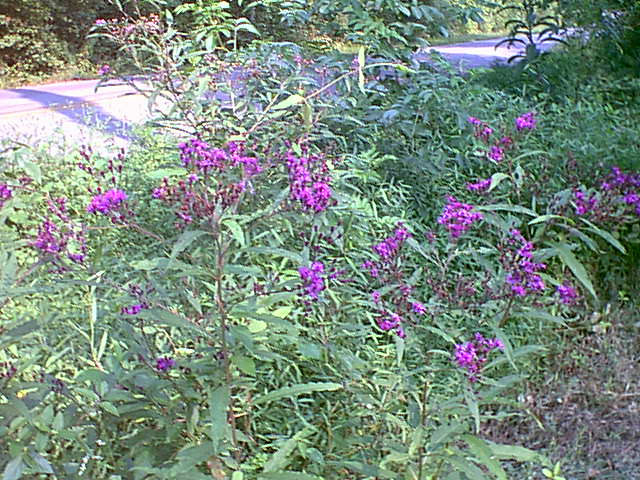
Every year I think of all the things I want to do when spring comes, hundreds of
projects I can never accomplish. This year I failed miserably, and therefore
lucked out. If I had started the orchard on the Menlo lot, added another garden
bed and three or four more planters here, my efforts would have been wasted
because of the searing heat and drought this past summer.
I carried bucket after bucket of water to the straggly bachelor buttons I had
started from seed and was rewarded with only a bloom now and then, seldom
more than two flowers at the same time. I would have liked a dense bed of
them, for the flowers were blue and there don't seem to be many truly blue
flowers, most are tinged with enough red to make them more lavender than
blue.
But all through the heat and drought the wildflowers bloomed and bloomed
with no one tending them. Their leaves sometimes wilted a bit when the sun
had blazed down all day, but would recover by the next morning.
Consider the lilies of the field....
No lilies, no fields, but thickets of wild touch-me-not grew on the banks of the
dry creek bed, more than any previous year. Their orange flowers shaped like
little cornucopias drew hummingbirds, delightful to observe. Once I watched
from the bank as two of the tiny birds fought over one patch of blossoms.
One hung in the air against his blur of wings, a tiny guard claiming those blooms
as his own, darting forth to attack the other who hovered near and would not
give up.

The common name of this plant is jewel weed, probably because of the
translucent yellow-green and pinkish stems. The juice from the stalk is
considered an antidote for poison oak. It is called wild touch-me-not
because its sickle-shaped seeds burst open at a touch when dry.
Orange is another minority color among the flowers.
There were also lots of wild sunflowers, the flowers much smaller than the
cultivated kind, but tall and cheerful massed along the creek bank, making
my walks along the dry bed most pleasant. Down near the bridge tall stalks
of bright purple ironweed accented the yellow sunflowers.
Joe pye weed with clusters of small pink or white flowers grew along the
pasture fence and on the ditch bank by the road, the little florets at first
distinct, then becoming ragged as the summer wore on, so that from the
distance they appeared to be a fuzzy mass.

It was a delight to come upon an occasional cardinal flower with its
notched crimson petals, usually only one and usually low on the bank,
but occasionally two, side by side. The same with the lobelias, their
hooded blossoms providing another example of really blue flowers.
My mother used to laugh when she saw a flower described in the Field
Guide to Wildflowers as "escaped". She said she had visions of flowers
running down the road with gardeners in hot pursuit.
The Term "escaped" meant the identified wildflowers had also been
cultivated.I wanted to reverse the process and wished I had saved seeds
from the cardinals and lobelias. I had bought a small pot of lobelias, the
kind with prostrate stems that hung over the sides of the pot. It bloomed
continuously all summer, lovely little blue flowers with the distinctive hoods.
The plastic tag identified it as an annual; the tall wild lobelias survive the
winters and bloom again.
But this past summer it was too hot even after the sun went down to do
much work outside, it was all I could do to keep the grass cut. I couldn't
bear to think of building planters or making more flower beds, and the
"escaped" flowers would have to be confined so that I could mow around
them.
A few years ago, there were only a few stalks of jewel weed here and there.
Now there are thickets, and there are small clumps of them all up and down
the creek.I can hope that the cardinals and lobelias will likewise spread.
And next spring I would... But that is the cry of all gardeners who dream
over seed catalogues throughout the fall and winter. Next spring, next year.....
Tuesday, November 21, 2006
Red and Blue Splotches on a Solid Pink State
After the recent election, the New York Times showed Georgia as a solid
pink state, meaning it was held by the Republicans, with no gains by either
party. As the Times was only concerned with the major offices, the governors,
senators, and members of congress, this was true from their viewpoint. But as
the people who live in the state find their lives affected by holders of all the
offices, it wasn't exactly true.
Republican Governor Sonny Perdue was re-elected, the voters also elected
the state's first Republican lieutenant governor, and, for the first time, a
Republican received the majority of votes cast in Chattooga County in a
race for state senator, all a cause for rejoicing by the local Republican Party.
There was another race that was very important in this small area of Georgia,
and should be important to the entire country.
About two years ago, just before the last election, the local offices of State
Court Judge and Solicitor General became vacant. The local newspaper
published the names of candidates for the offices, which are non-partisan, but
the two most well-known candidates were both Democrats, and both had a
good chance of winning. Governor Perdue stepped in and, according to a law
which allows him to do so, appointed two Republicans to fill the vacancies,
thereby taking the decision away from the voters.
The Perdue appointees, both decent, competent men, had to run for re-
election this year, and both lost- to two Democrats, including one of those
who had tried to be a candidate two years ago. In the interim he had been
convicted of Driving Under the Influence, and the State Court Judge he
defeated had been instrumental in setting up a drug court, intended to help
first offenders of drug and alcohol abuse get into rehabilitation programs.
Even with this blot on his record, and even though there were more votes
for Republicans than Democrats in most of the other contests, he and the
other Democrat won.
There were constant reminders that elections for these two offices were
non-partisan. But Perdue had made them partisan by appointing Republicans.
Some of the Republicans in the county voted Democrat, and voted in a judge
with a DUI conviction, because that was the only way to show Perdue that it
was wrong to take away the people's right to vote.
The Supreme Court's overturning the Georgia law requiring that voters present
a driver's license in order to vote was also a people's victory. This smacked of
the old poll tax which was intended to keep Blacks from voting, but which also
kept many poor whites away from the polls. Those who make Georgia's laws
did not seem to care that many poor and elderly people do not drive. Now the
some 17 documents that can be presented as proof of a voter's identity include
rent receipts, utility bills, birth certificates. It's a shame that it still takes a fight
through the courts to preserve the right of everyone to vote.
pink state, meaning it was held by the Republicans, with no gains by either
party. As the Times was only concerned with the major offices, the governors,
senators, and members of congress, this was true from their viewpoint. But as
the people who live in the state find their lives affected by holders of all the
offices, it wasn't exactly true.
Republican Governor Sonny Perdue was re-elected, the voters also elected
the state's first Republican lieutenant governor, and, for the first time, a
Republican received the majority of votes cast in Chattooga County in a
race for state senator, all a cause for rejoicing by the local Republican Party.
There was another race that was very important in this small area of Georgia,
and should be important to the entire country.
About two years ago, just before the last election, the local offices of State
Court Judge and Solicitor General became vacant. The local newspaper
published the names of candidates for the offices, which are non-partisan, but
the two most well-known candidates were both Democrats, and both had a
good chance of winning. Governor Perdue stepped in and, according to a law
which allows him to do so, appointed two Republicans to fill the vacancies,
thereby taking the decision away from the voters.
The Perdue appointees, both decent, competent men, had to run for re-
election this year, and both lost- to two Democrats, including one of those
who had tried to be a candidate two years ago. In the interim he had been
convicted of Driving Under the Influence, and the State Court Judge he
defeated had been instrumental in setting up a drug court, intended to help
first offenders of drug and alcohol abuse get into rehabilitation programs.
Even with this blot on his record, and even though there were more votes
for Republicans than Democrats in most of the other contests, he and the
other Democrat won.
There were constant reminders that elections for these two offices were
non-partisan. But Perdue had made them partisan by appointing Republicans.
Some of the Republicans in the county voted Democrat, and voted in a judge
with a DUI conviction, because that was the only way to show Perdue that it
was wrong to take away the people's right to vote.
The Supreme Court's overturning the Georgia law requiring that voters present
a driver's license in order to vote was also a people's victory. This smacked of
the old poll tax which was intended to keep Blacks from voting, but which also
kept many poor whites away from the polls. Those who make Georgia's laws
did not seem to care that many poor and elderly people do not drive. Now the
some 17 documents that can be presented as proof of a voter's identity include
rent receipts, utility bills, birth certificates. It's a shame that it still takes a fight
through the courts to preserve the right of everyone to vote.
Friday, November 10, 2006
A Fairyland of Lights
It happens every September.
I will walk down by the creek one night and there are hundreds of tiny
bluish-white lights dotting the banks, the sandbars, and even in the grass
near the water.
The first time I saw them it was one of those late evenings when I was
burning brush and waste paper and at the same time cooking what I call
a trash fire supper. Burning the trash- a necessary task- leaves beneficial
ashes for the garden beds and provides me with a delicious meal, usually
potatoes baked in the embers, they bake to mealy goodness best when those
aluminum nails are run through them, and sometimes thin little steaks rubbed
with butter and garlic, and usually a pig's foot or hunk of backbone for Buckie,
who also gets one of the potatoes.
While waiting for the potatoes to finish cooking, I walked over to the creek
bank. Even on fall nights before it turns too cold there is a chance of seeing
one of the elusive water snakes gliding along. No snakes this night, but I saw
something glittering at the water's edge.At first I thought it must be broken
glass reflecting the fire's light, so I started down the bank, planning to pick it
up. And found myself surrounded by a fairyland of lights. I turned off the
flashlight and just stood there breathing.
Finally, after what seemed long time of stillness, I moved cautiously forward,
not wanting to step on the lights. But they would go out when I walked near
them, no matter how carefully I stepped. Sometimes, as I stood watching,
many of the lights further away from me would disappear, but when I swept
the banks with the flashlight then turned it off, they would come back on,
shining steadily, as if in response to my light.
My quest to learn what they are was hampered for a long time because
I assumed they were some type of crustacean. I had forgotten that
sometimes the way to knowledge is to first discard all preconceived
notions and set forth with an open mind. But when I learned there are
many bioluminescent marine creatures, but rarely any in fresh waters, I
was sure these must be some of the rare ones.
Then my youngest son, Andy, came to see the lights, and stood there,
delighted and awed. "I've been around creeks all my life, " he said,
"And I've never seen anything like this." He had to dig one out to see
what made the lights, and exclaimed, "Why, it's just a bug!"
Then I stopped seeing little crustaceans and began comparing them to
illustrations of bugs. I would never have thought of fireflies, for fireflies
have traffic-light yellow lights that blink off and on, and these were a more
pleasing greenish or bluish white that did not blink. But they are indeed
fireflies (Lampyridae), the lightning bugs of childhood, or rather it is the
firefly larva.
They are about an inch long. look flattened, mud or sand colored. Such
homely creatures to make this fairyland of lights. One theory is that they
burrow in damp earth because that is where their prey is, earthworms or
other small worms.
The light show by the creek usually lasts about two weeks. After the first
heavy rain there is only a scattering of lights. I don't know if the rain washes
most away or if they simply burrow deeper to prepare for the cold soon to
come. As the nights become colder, as usually soon happens following the
hard rain, the lights disappear altogether.
It is usually late May or early June when the mature fireflies rise up from the
grass and turn their yellow lights on and off and on throughout the summer nights.
It was in June when Gil and I brought our eight cats from Chicago about
three months after we started moving to North Georgia. Oscar, one of the
younger cats, was irritable from the long drive and wary of the strange
surroundings. He would stop complaining long enough to rise on his back
feet and bat at the low-flying fireflies.
Then I realized we hadn't had fireflies in Chicago. I was well aware that we
had never been able to see the stars. So on that June night we walked about
the yard with the cats beneath a starry sky with fireflies drifting lazily upward
around us.
That was when we were living in the house that burned last January. Gil, the
cats, and the house are all gone now. But the same sky full of visible stars
stretches overhead here, fireflies rise up from the grass on summer nights,
and every fall I can look forward to the fascinating light display their young
provide.
I will walk down by the creek one night and there are hundreds of tiny
bluish-white lights dotting the banks, the sandbars, and even in the grass
near the water.
The first time I saw them it was one of those late evenings when I was
burning brush and waste paper and at the same time cooking what I call
a trash fire supper. Burning the trash- a necessary task- leaves beneficial
ashes for the garden beds and provides me with a delicious meal, usually
potatoes baked in the embers, they bake to mealy goodness best when those
aluminum nails are run through them, and sometimes thin little steaks rubbed
with butter and garlic, and usually a pig's foot or hunk of backbone for Buckie,
who also gets one of the potatoes.
While waiting for the potatoes to finish cooking, I walked over to the creek
bank. Even on fall nights before it turns too cold there is a chance of seeing
one of the elusive water snakes gliding along. No snakes this night, but I saw
something glittering at the water's edge.At first I thought it must be broken
glass reflecting the fire's light, so I started down the bank, planning to pick it
up. And found myself surrounded by a fairyland of lights. I turned off the
flashlight and just stood there breathing.
Finally, after what seemed long time of stillness, I moved cautiously forward,
not wanting to step on the lights. But they would go out when I walked near
them, no matter how carefully I stepped. Sometimes, as I stood watching,
many of the lights further away from me would disappear, but when I swept
the banks with the flashlight then turned it off, they would come back on,
shining steadily, as if in response to my light.
My quest to learn what they are was hampered for a long time because
I assumed they were some type of crustacean. I had forgotten that
sometimes the way to knowledge is to first discard all preconceived
notions and set forth with an open mind. But when I learned there are
many bioluminescent marine creatures, but rarely any in fresh waters, I
was sure these must be some of the rare ones.
Then my youngest son, Andy, came to see the lights, and stood there,
delighted and awed. "I've been around creeks all my life, " he said,
"And I've never seen anything like this." He had to dig one out to see
what made the lights, and exclaimed, "Why, it's just a bug!"
Then I stopped seeing little crustaceans and began comparing them to
illustrations of bugs. I would never have thought of fireflies, for fireflies
have traffic-light yellow lights that blink off and on, and these were a more
pleasing greenish or bluish white that did not blink. But they are indeed
fireflies (Lampyridae), the lightning bugs of childhood, or rather it is the
firefly larva.
They are about an inch long. look flattened, mud or sand colored. Such
homely creatures to make this fairyland of lights. One theory is that they
burrow in damp earth because that is where their prey is, earthworms or
other small worms.
The light show by the creek usually lasts about two weeks. After the first
heavy rain there is only a scattering of lights. I don't know if the rain washes
most away or if they simply burrow deeper to prepare for the cold soon to
come. As the nights become colder, as usually soon happens following the
hard rain, the lights disappear altogether.
It is usually late May or early June when the mature fireflies rise up from the
grass and turn their yellow lights on and off and on throughout the summer nights.
It was in June when Gil and I brought our eight cats from Chicago about
three months after we started moving to North Georgia. Oscar, one of the
younger cats, was irritable from the long drive and wary of the strange
surroundings. He would stop complaining long enough to rise on his back
feet and bat at the low-flying fireflies.
Then I realized we hadn't had fireflies in Chicago. I was well aware that we
had never been able to see the stars. So on that June night we walked about
the yard with the cats beneath a starry sky with fireflies drifting lazily upward
around us.
That was when we were living in the house that burned last January. Gil, the
cats, and the house are all gone now. But the same sky full of visible stars
stretches overhead here, fireflies rise up from the grass on summer nights,
and every fall I can look forward to the fascinating light display their young
provide.
Monday, October 30, 2006
Columbus, Anyone?
In 1492, Columbus sailed the ocean blue...
Does anyone celebrate Columbus Day other than school children, who must
suffer again through the tale of how the sailors panicked, fearful that
the ship would sail over the edge of the world and drop into a void
during that voyage motivated by greed and the drive to conquer that
brought death and disease to the native peoples.
For me, it means I can spend the whole day at home, post offices closed,
no mailing of book orders. But for most working people it is just another
mark on the calendar, no three-day weekend for them.
Native Americans claim Columbus never "discovered" America, for the country
was never lost. Last year a tale was circulated about how some American
Indians were going to rent three ships and set out to discover England and
Spain. Nothing was said about whether they were to take along strings of
beads and other trinkets.
A Native American member of Biblio, the booksellers forum by listserv,
wrote that only the week before he had discovered New Jersey, but had
decided against making an offer for it, returning instead to the Canadian
province where he preferred to live.
The day after Columbus Day we had to resume mailing out books.
Does anyone celebrate Columbus Day other than school children, who must
suffer again through the tale of how the sailors panicked, fearful that
the ship would sail over the edge of the world and drop into a void
during that voyage motivated by greed and the drive to conquer that
brought death and disease to the native peoples.
For me, it means I can spend the whole day at home, post offices closed,
no mailing of book orders. But for most working people it is just another
mark on the calendar, no three-day weekend for them.
Native Americans claim Columbus never "discovered" America, for the country
was never lost. Last year a tale was circulated about how some American
Indians were going to rent three ships and set out to discover England and
Spain. Nothing was said about whether they were to take along strings of
beads and other trinkets.
A Native American member of Biblio, the booksellers forum by listserv,
wrote that only the week before he had discovered New Jersey, but had
decided against making an offer for it, returning instead to the Canadian
province where he preferred to live.
The day after Columbus Day we had to resume mailing out books.
Thursday, October 26, 2006
Closed For the Season
Another summer gone. The leaves are turning. The color gives depth
to the woods around me, no longer a solid wall of green. Individual trees
stand out on the hills and mountains. Through my window every day I
see the bronze of dogwood, the red of maples amidst varying shades of
yellow and brown deep in the remaining green across the creek.
Frost killed the tomato and pepper plants and blackened the tall basil
more than a week ago. Gone are the barefoot mornings, the freedom from
coats and sweaters, and no more sleeping with the doors left open all
night. No more standing by the garden bed and eating tomatoes warm from
the sun.
I used to dream of hot southern summers when I tried to swim in Lake
Michigan too early in the season. Louis Grizzard once wrote that Chicago
has two seasons: winter and the Fourth of July.
But I am glad to be living where there are four distinct seasons. Not for
me the endless summers of those much-advertised old folks' retreats in
Florida, nor Houston, where I spent last New Years weekend when it was
in the mid 80's and the sidewalks reflecting back the heat made walking
around uncomfortable. They may not have cold winters, but neither do they
have real springs.
Now I shall enjoy the crisp, bright days of fall. Highs are usually 50's
to 60's, falling to chilly 30's or low 40's at night. I won't have to travel
far to see a color display. In a couple weeks or so the trees on the ridges
and mountains should be clothed in all their glory.
One year the fallen leaves completely covered the creek. It was a moving,
undulating carpet of patchwork color. No water visible, it looked as if
one might walk across it. Leaves float down it now, but not since that
particular year has the creek been completely covered.
Every year is different.
When I drive to my small building where my books are stored, a drive
between trees turning and changing and color deepening. I think of the
Zen phrase: "Be Here Now."
Now I shall be here. Now I shall exult in being alive on each of these
beautiful fall days.
to the woods around me, no longer a solid wall of green. Individual trees
stand out on the hills and mountains. Through my window every day I
see the bronze of dogwood, the red of maples amidst varying shades of
yellow and brown deep in the remaining green across the creek.
Frost killed the tomato and pepper plants and blackened the tall basil
more than a week ago. Gone are the barefoot mornings, the freedom from
coats and sweaters, and no more sleeping with the doors left open all
night. No more standing by the garden bed and eating tomatoes warm from
the sun.
I used to dream of hot southern summers when I tried to swim in Lake
Michigan too early in the season. Louis Grizzard once wrote that Chicago
has two seasons: winter and the Fourth of July.
But I am glad to be living where there are four distinct seasons. Not for
me the endless summers of those much-advertised old folks' retreats in
Florida, nor Houston, where I spent last New Years weekend when it was
in the mid 80's and the sidewalks reflecting back the heat made walking
around uncomfortable. They may not have cold winters, but neither do they
have real springs.
Now I shall enjoy the crisp, bright days of fall. Highs are usually 50's
to 60's, falling to chilly 30's or low 40's at night. I won't have to travel
far to see a color display. In a couple weeks or so the trees on the ridges
and mountains should be clothed in all their glory.
One year the fallen leaves completely covered the creek. It was a moving,
undulating carpet of patchwork color. No water visible, it looked as if
one might walk across it. Leaves float down it now, but not since that
particular year has the creek been completely covered.
Every year is different.
When I drive to my small building where my books are stored, a drive
between trees turning and changing and color deepening. I think of the
Zen phrase: "Be Here Now."
Now I shall be here. Now I shall exult in being alive on each of these
beautiful fall days.
Subscribe to:
Posts (Atom)